
Kirsten Colquhoun: Even the most sceptical colleague can see that when pupils feel safe, attainment rises
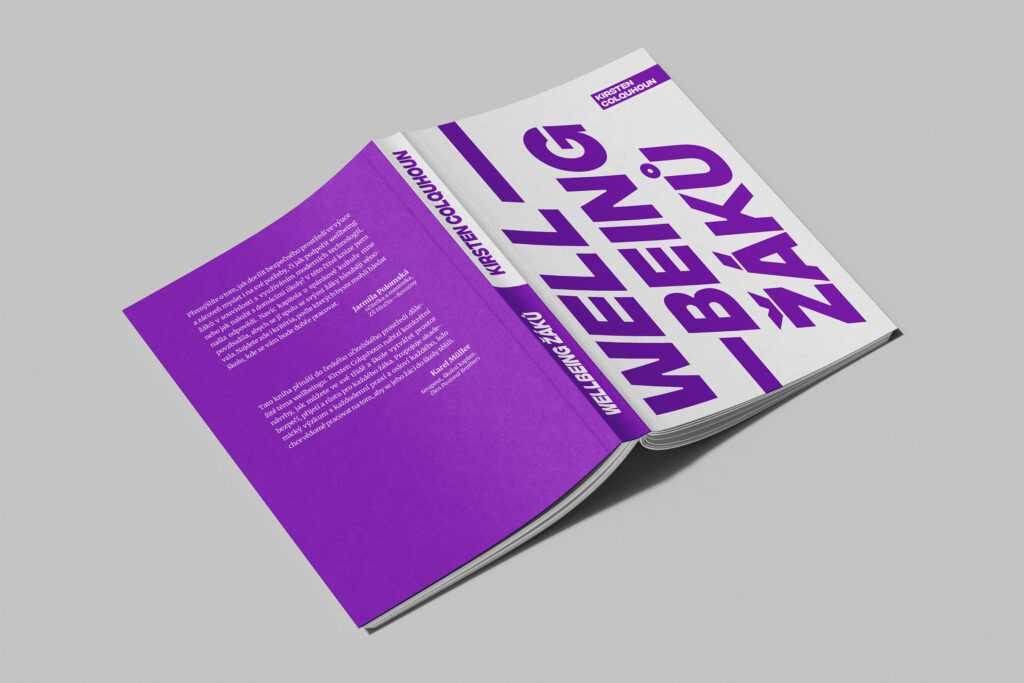
Wellbeing in schools is not an add-on to learning nor a series of one-off activities. According to wellbeing expert Kirsten Colquhoun, it is primarily built through everyday practice — clear expectations, relational consistency, routines and a sense of belonging. In this interview for EDLB, she explains why pupils thrive when they know what is expected of them, where the teacher’s role in supporting wellbeing begins and ends, and why small, everyday moments in the classroom can have such a powerful impact.

Kirsten Colquhoun has worked in secondary education for over 15 years since graduating as a history teacher in 2008. She is a passionate classroom practitioner whose years of experience and MEd specialising in pastoral care have given her a broad perspective and critical understanding of pupil wellbeing. Furthermore, she has written for a number of publications including the TES as well as presenting at conferences and researchED events. You can find her on X as @kirstcolquhoun. [photo: KC archive; graphics: EDLB]
What do you consider the most fundamental idea that gets lost in the debate about wellbeing?
The idea that education and wellbeing are not competing priorities, but that they are deeply interconnected. A strong education supports wellbeing, and wellbeing enables pupils to thrive academically. I am often struck by how surprised colleagues can be when I argue that engagement, progress and attainment are powerful drivers of wellbeing. Caring and supporting wellbeing means actively enabling purpose, achievement, belonging and intellectual growth, which are lifelong protective factors. When pupils experience success and feel capable within the curriculum, that is wellbeing in action!
Under what circumstances can attempts to promote wellbeing become counterproductive—and how might this be identified?
Promoting wellbeing becomes counterproductive when it comes at the expense of teachers’ own wellbeing or when individuals feel they must carry everything alone. We cannot wave magic wellbeing wands and nor should we feel we have to. Teaching is hugely demanding, and we in education naturally care deeply about our pupils, but this care can sometimes lead to over-extension. Recognising that as individual teachers that work within systems and teams is essential. Passing concerns to a tutor, teacher, pastoral lead, safeguarding team or senior colleague is not giving up but the opposite, it is acting responsibly. When teachers feel depleted, overwhelmed or solely responsible for fixing complex needs, that is a sign something is misaligned. Sustainable wellbeing requires shared responsibility and processes.
Your book took shape during the Covid-19 pandemic. What impact has this period had on current pupil—and teacher—wellbeing?
The pandemic sharpened our awareness and ironically, our isolation made it visible that as people we have a deep need for connection, routine, security and belonging. Post pandemic I feel we are now less likely to take wellbeing for granted. There is greater recognition that learning does not happen in isolation from emotional and relational factors. For teachers, too, the period prompted reflection on workload, boundaries and professional identity. The pandemic normalised and therefore accelerated conversations that were long overdue.
What is the role of the teacher of wellbeing in everyday school life—and where does their responsibility end?
Teachers have a unique vantage point in that they see pupils daily and are well placed to notice small changes be it a shift in behaviour, engagement or mood that may signal something more significant. These observations, when shared appropriately with pastoral colleagues, can form part of a wider safeguarding picture. At the same time, delivering a high-quality education is itself a profound contribution to wellbeing. Day-to-day encouragement, clear expectations, academic challenge and relational consistency all matter deeply and build a stable foundation for pupils.
However, this responsibility ends, or is shared when specialist intervention begins. Teachers are not counsellors or social workers and it is vitally important that passing concerns on to others is not treated as giving up or passing the buck. Their responsibility is to notice, record, respond appropriately and teach well not to resolve every difficulty alone.
In school settings, do you encounter misunderstanding or oversimplification of wellbeing as a concept? How does this typically manifest?
Yes, and often at conferences where there is an over-commercialisation or the idea that wellbeing is an add-on, a programme, a worksheet, a themed week, a product. In reality, creating a culture of wellbeing in our schools is the result of a hundred small actions. It sits in how we shape and respond to behaviour, how we speak to pupils, how we structure learning, how consistent we are and how we build connections. When it becomes something separate from the core business of education, it risks losing impact.
Can establishing clear rules and enforcing them consistently be understood as part of supporting pupil wellbeing?
Absolutely. Boundaries, clarity and consistency are fundamental to secure relationships. Pupils thrive when they understand expectations and feel confident navigating them, this supports equity and ensures everyone is able to access the school system confidently. Clear rules reduce uncertainty. They make the hidden curriculum visible. When pupils know what is expected and experience fair, predictable responses, they are more likely to feel safe, capable and motivated. That sense of security is deeply connected to wellbeing.
And how does building routines and habits fit into this framework?
Routines are powerful but do require consistency and time. They reduce cognitive load, freeing pupils’ mental capacity for thinking and learning rather than working out what happens next. Change and challenge are part of learning, but when they are framed within consistent routines, pupils are more willing and able to engage.
What is the lowest-hanging fruit for teachers when it comes to strengthening pupil wellbeing?
Relational consistency. Greeting pupils at the door. Noticing effort. Using names, and building these connections. To get wellbeing and belonging it starts with connection. Following up on small comments, observations or changes are simple, sustainable practices that require no additional funding or elaborate systems. When pupils feel seen and known, their sense of belonging increases and belonging is one of the strongest predictors of positive outcomes in school.
How could a teacher clearly and accessibly introduce the topic of wellbeing to pupils — and perhaps also to their parents?
By connecting it to learning. I frame wellbeing as the conditions that help us learn and live well: sleep, routine, connection, challenge, purpose and reflection, especially during harder times like exams etc.
With pupils, this might involve discussing how the brain responds to stress, how habits shape progress, or how belonging affects confidence and hanging it on their own experiences so far. With parents, I would emphasise that we are on the same side and through partnership together we aim to create the stability and encouragement pupils need to flourish.
How might we approach the wellbeing—or resilience—of teachers?
By being honest about the link between wellbeing and outcomes. When pupils feel safe, connected and engaged, attainment rises. Even the most sceptical colleague can see the professional value in that!
However, teacher wellbeing must not be reduced to productivity. Sustainable systems, realistic expectations and collective responsibility matter. Ensuring what we do is impactful is key, for example feedback and marking is often an expectation but in reality, hours and hours of marking do not equate to impact on the learner. Being research informed can give us the knowledge to challenge habits with evidence of what is really impactful.
We often hear the phrase “snowflake generation”. What comes to mind when you hear this label?
It feels unfair and dismissive, yet part of a familiar pattern, every generation has been labelled in some way. Ancient Greek philosophers complained about youth being disrespectful and indulgent. Victorian commentators criticised younger generations for moral decline and so on! Often, those labels tell us more about the anxieties of the older generation than the realities of the younger one.
Young people today face pressures, social media, global uncertainty, academic competition and seeking to understand their context is far more productive than dismissing them.
Is there anything in the area of wellbeing—especially pupil wellbeing—that can still surprise you?
I am continually struck by how small moments can have profound impact. A brief conversation, a well-timed piece of encouragement, a teacher noticing something subtle these can alter a pupil’s trajectory more than we might realise. When I think about the challenges I have faced in life, it’s the small moments of kindness that stand out as being memorable. Wellbeing is not always found in large initiatives. Often, it is built quietly, day by day, in an ordinary classroom!
Michal Orság & EDLB
— read sample (CZ) ▼
